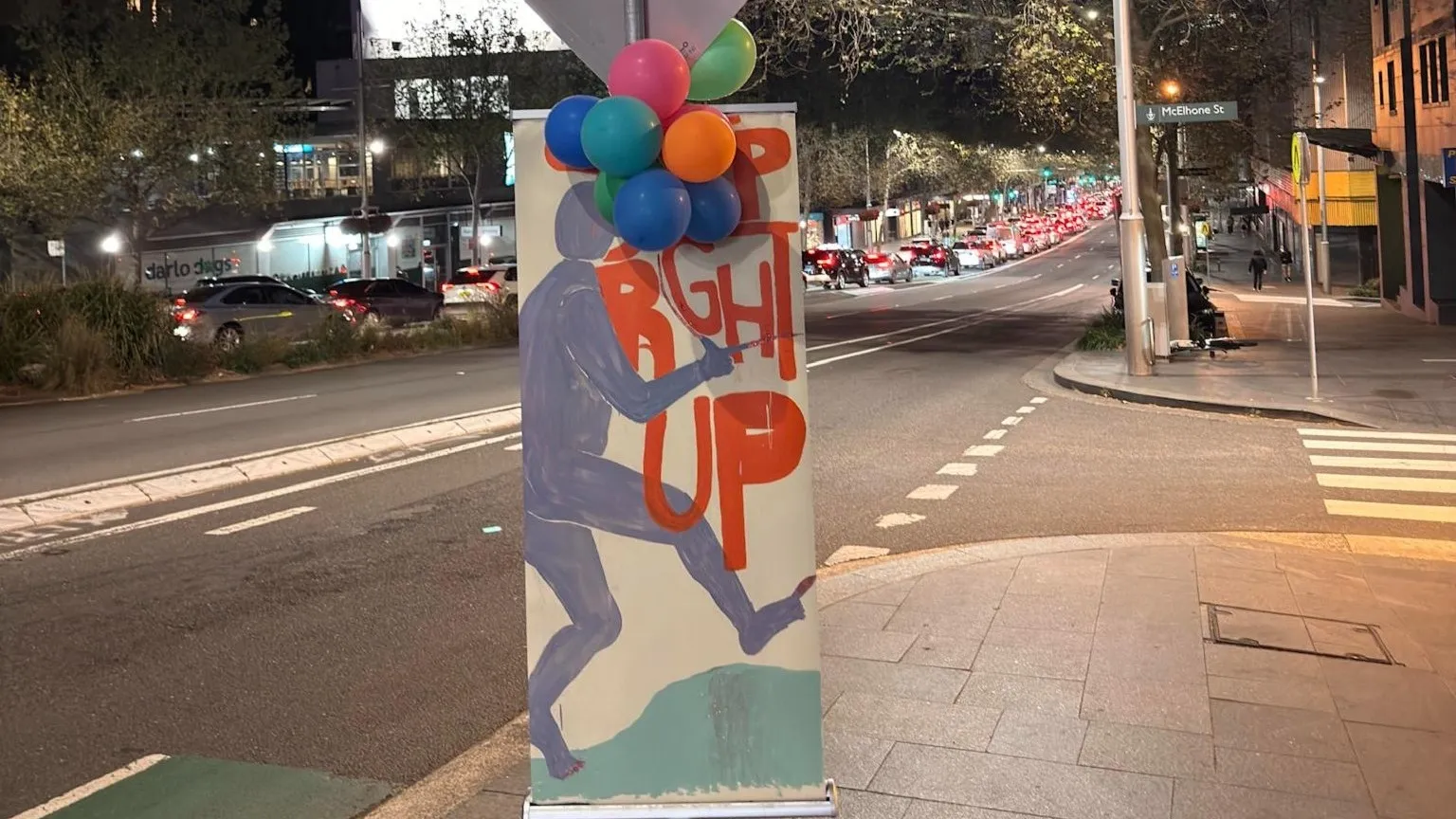
DISPATCH 002 // SIGNAL // COMMUNITY 6 MIN
The Creative Backroom Behind My Street
A barber shop on my block became a space for writing nights and painting. That isn’t nostalgia for the third place. It’s an economic signal, and it’s showing up all over Sydney.
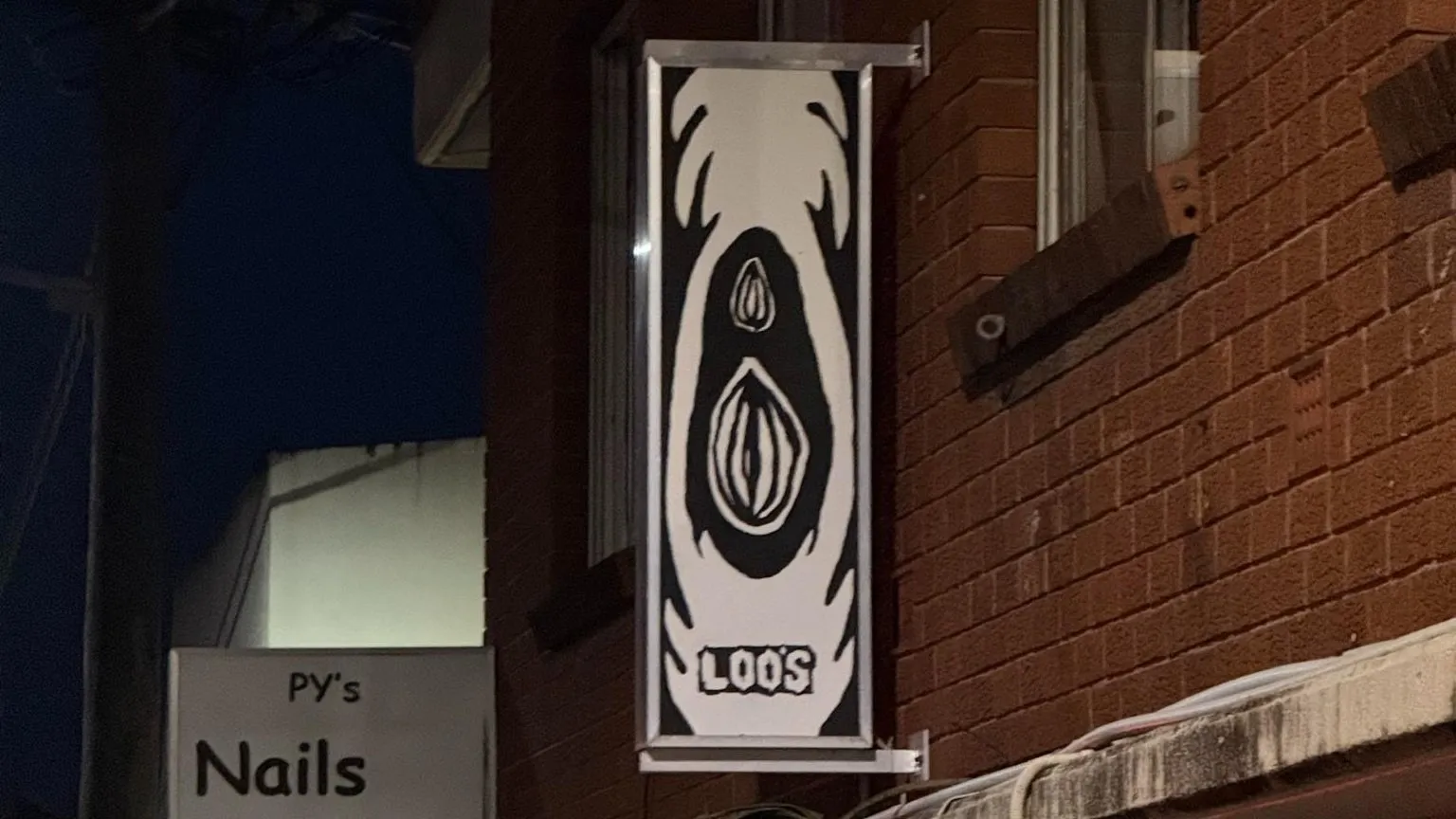
Last month, on one of my mental health walks around the block, I came across a room tucked behind my street called Loo’s Lounge. The name alone is funny, a nod to the suburb, Woolloomooloo. It isn’t the most glamorous part of Sydney, and only someone who has lived here a while would call it the Loo with that much affection.
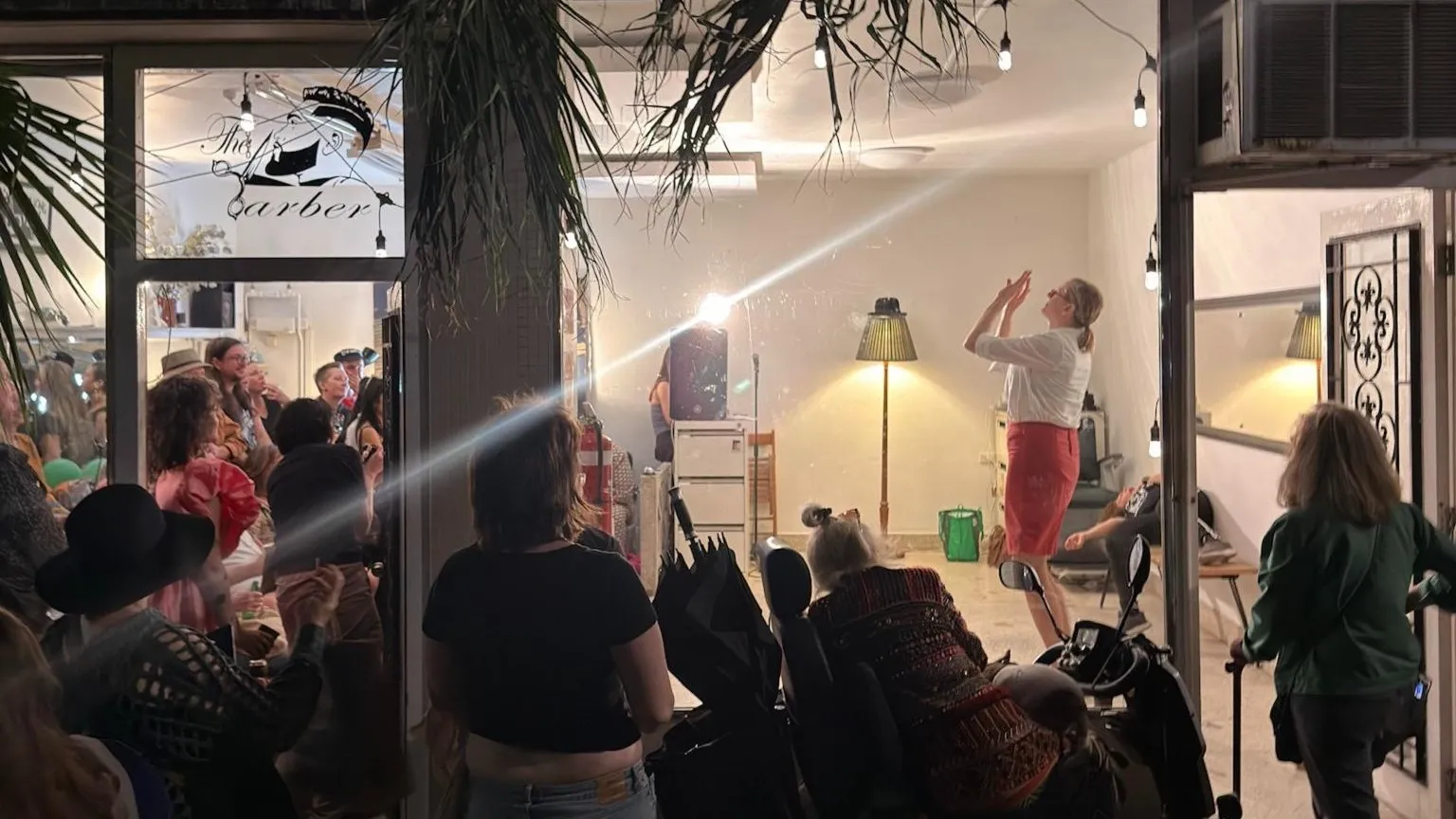
The room used to be a barber shop, one I saw open maybe two or three times in the six years I’ve lived here. It is not a bar, though you can drink there. It is not a gallery, though things get shown. It is not a venue, because a venue implies a lineup and a door. The most accurate description is the dullest one: it is a room that is open on some nights where people come to do “something” together.
On any given night that “something” might be writing or painting or a jewellery exhibition. The programming is unglamorous in a way that is almost a statement - come and make a thing, badly, next to a stranger, on a Tuesday night.
I went to one of their bigger nights. The opening, back in September. Two people performed an abstract, wordless mime and dance to hold music, the kind that loops while you wait for the next available customer care representative. There was singing, and at the end, even a pole dance. The crowd is the detail I keep returning to: genuinely mixed ages, young and old in the same small room. People who live nearby. People who stumbled in while walking the dog. Friends and family of the performers, perhaps. Nobody curated that. Nobody ran a three-week social media campaign to fill the room, just posters across the neighbourhood.
01 — WHY A BARBER SHOP
The space it replaced matters more than it first appears.
A barber shop was already a third space - the original one, with its own unspoken social contract about who could sit and how long you could stay without buying anything. When that model fails, what it leaves behind is a small, cheap, street-level room with a fitout somebody else already paid for. Dead retail is the raw material of the new third space.
“Dead retail is the raw material of the new third space.”
That is the first part of the economic read.
The second part is that young people in Australia drink less alcohol than the generation before them and significantly less than the one before that. For a venue, that is existential. A room that makes its money on the fourth round has no business model when nobody orders the second. So the question quietly reorganises itself from what will make people consume more to what else is a room for.
The answer, increasingly, is: a reason. A thing to do. Writing, painting, a record being played properly, someone talking at the front. The activity is not a gimmick layered on top of the bar. The activity is the product and the bar is the thing that keeps the lights on.
02 — THE WEEKNIGHT MIGRATION
Then there is the night of the week, which is the part I think is a great move.
Saturday night is saturated and expensive. Rents, security, surge pricing on the way home and a city of people who have already decided where they are going. There is no room for a new unknown space on a Saturday - it is competing with everything, for people who are in the mood to spend.
A Sunday has less competition. A Tuesday is cheap to run. A Thursday attracts a completely different reason for showing up: nobody is at a writing night on a weeknight because it is the best option available. They are there because they specifically wanted that. The weeknight crowd is self-selecting in a way the weekend crowd structurally cannot be.
This is where the signal sharpens. Sydney’s interesting hours are migrating off the weekend. The city spent fifteen years having an argument about its nightlife - lockouts, closures, the slow re-opening - and while that argument was happening, the actual interesting rooms quietly moved to the days nobody was fighting over. Reminding me of this BYO warehouse jazz night that happened every Thursday night in Marrickville and was one of the best third spaces for a lot of young people.
“Sydney’s interesting hours are migrating off the weekend.”
03 — IT’S A PATTERN, NOT A ROOM
One converted barber shop is an anecdote. I would not be writing this if it were only that.
I came across a party in a laundromat with DJs playing some sets a few weeks ago. An actual working laundromat - another failed-ish retail format with a long lease and a street frontage. Nobody involved was trying to make a point about third spaces. They had a room and a sound system and a desire to establish a community.
Once you start looking, the pattern has a shape: cheap inherited fitout, an activity rather than a bar tab, a weeknight, a mixed crowd drawn from a few streets rather than the whole city. Sydney has quietly developed an alternative to going out and it does not look like going out. It looks like turning up.
“Sydney has quietly developed an alternative to going out and it does not look like going out. It looks like turning up.”
Morning coffee ‘raves’ that took over Bondi were another signal of that? Perhaps. I am quite discerning about those coffee raves for another reason but that’s for another dispatch.
04 — THE PROBLEM WITH WRITING THIS DOWN
A few months ago I wrote an article arguing that every good room eventually dies of being found. So I should deal with the obvious objection to this one.
Here is where I have landed and it is a real distinction rather than a convenient one. The rooms in that article survive by being unfindable, because exclusivity is their mechanism. The withholding is the product. Loo’s Lounge is a small business on a residential street, and it needs some people on a Tuesday to make rent. These are opposite machines. One is protected by silence; the other is killed by it. A room like this is made to be found. The only question is who finds it.
“A room like this is made to be found. The only question is who finds it.”
What makes it work is that it is unassuming. The people there live nearby and nobody came because it was a destination. Busy is fine. The risk is a room full of people who came for the idea of it, there to document the find rather than to be in it. That is a slower, sadder death than closing.
So read this as an argument rather than a recommendation. I am not sending you to the room behind my street. There is almost certainly one behind yours, probably in a shop that used to be something else, probably open on a night you had written off.