DISPATCH 001 // MACHINA // MEDIA 8 MIN
A Thousand Cameras, One Photograph
Our feeds attended Dark Mofo a week before our feet did. A field report on why the feed makes every festival look the same - and what that sameness is hiding.
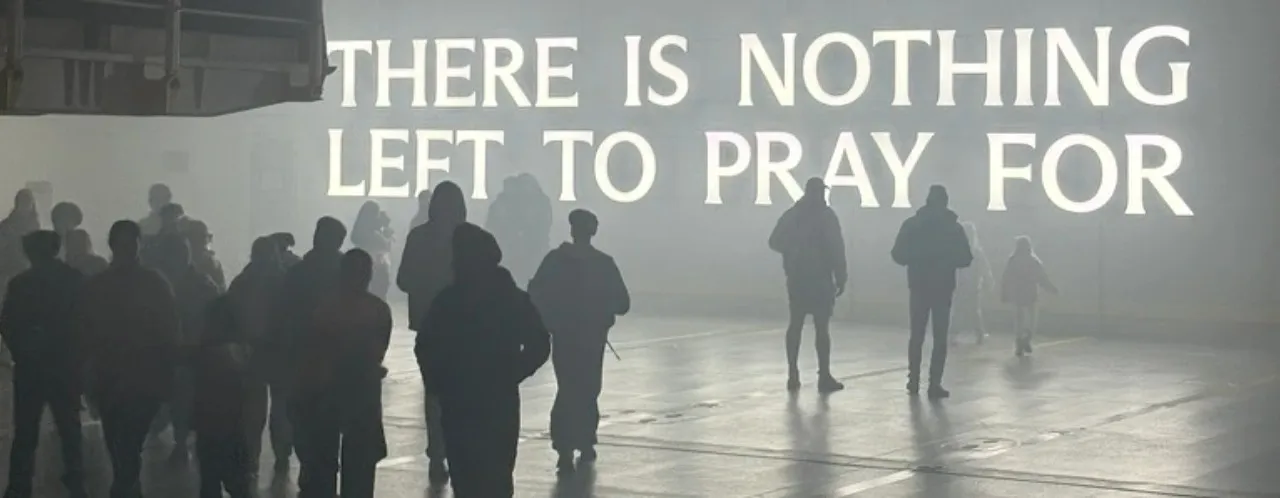
Dark Mofo runs across two weeks of Tasmanian winter. I attended Dark Mofo twice this year. Only the second time was in person.
The first time I attended was through Instagram stories of four friends who’d gone for the opening weekend. I follow them; they follow each other; their mutuals follow all of them. And for four days my feed ran the same festival on a loop. The same red glow, the same crosses, the same fire. Everything shot from the same angles, reshared and tagged back and forth between the same people until their combined audience must have watched a single Dark Mofo. Four points of view had produced one view.
In the age of the algorithm we have all experienced this sort of coverage in some way or form - when our friends and their mutual friends travel together or go to the same bottomless brunch.
“A POV where every P is standing in the same V is not a point of view anymore. It’s coverage.”
01 — WHY IT ALL LOOKS THE SAME
Three forces come together to make it all look the same.
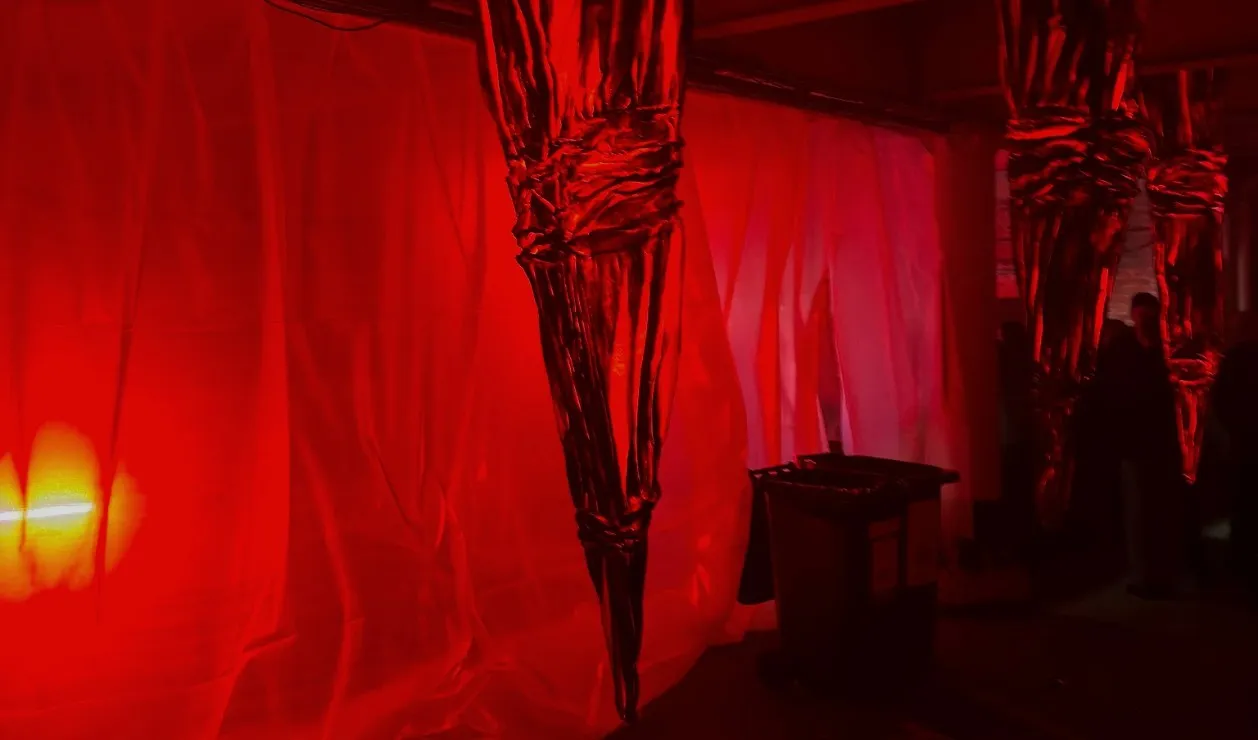
The first is architecture. Dark Mofo is one of the most art-directed environments in the country - the crosses, the fire, the red wash are designed sightlines. The festival redirects every attendee to the same POV the way a stadium redirects every seat’s attention to the same field. You don’t find the POV. The POV was found for you.
The second is the algorithm, doing what it always does: converging taste. The first people to experience Dark Mofo’s installations post their POVs online; their posts perform; the official Dark Mofo page reshares these stories and their own recommendations, handing every follower a structure of things to find at the festival. By the second night, the feed has already decided what the ‘correct’ Dark Mofo post looks like and thousands of people are locating those exact POVs, their phones unconsciously filing them. Nobody chose sameness. Sameness was selected, the way it is selected everywhere now - the same beige interiors, the same espresso-lit restaurants, the same trip to Japan. The feed is a Machina for turning many eyes into one eye.
The third force is the one that deserves tenderness, because it’s human. Most of the content is never really documentation. It is social glue. The post says we were here together. The tag says you matter to me. The reshare says I saw you seeing it. The actual image in the story is almost beside the point - which is exactly why they’re identical. Nobody was hunting for a unique shot or auditioning as a photographer. They were performing a friendship ritual that happens to wear a photograph as its costume. Judged as photography, it’s redundant. Judged as affection, it’s heartwarming. Both realities are true together.
But step back from the individual posts and look at the aggregate, because the aggregate has an owner. A thousand attendees producing near-identical footage of designed sightlines is, functionally, a distributed advertising shoot - unpaid, self-organising, algorithmically edited, delivered to precisely the audience most likely to book flights next June. The festival doesn’t need to buy this campaign. It only needs to lay out the dots and let people enjoy connecting them. The human brain loves it when scattered points resolve into a pattern.
02 — IS THAT SELLING OUT?
Here’s where the easy version of this article would say the festival has gone mainstream and the easy version would be lazy. Dark Mofo went on hiatus in 2024 while it rebuilt its finances; what returned has to pay for itself in a way the early years never did. More visibility, more legible content, more attendees flying in - that’s not drift, that’s a survival strategy and the alternative was a smaller festival or no Dark Mofo at all.
The sophisticated read is stranger: the shareable layer isn’t the festival selling its soul. It’s the festival’s funding and camouflage mechanism. Because here’s what the feed never showed me and what I only learned standing in Hobart: a lot of interesting rooms this year produced no content at all. No listings, no signage, no phones. A lot of spaces and events ran on minimal social media advertising but just word of mouth and a judgment call at a door. One festival, two economies.
“One festival, two economies. The visible one is priced in impressions. The invisible one is priced in presence.”
03 — THE MERCH
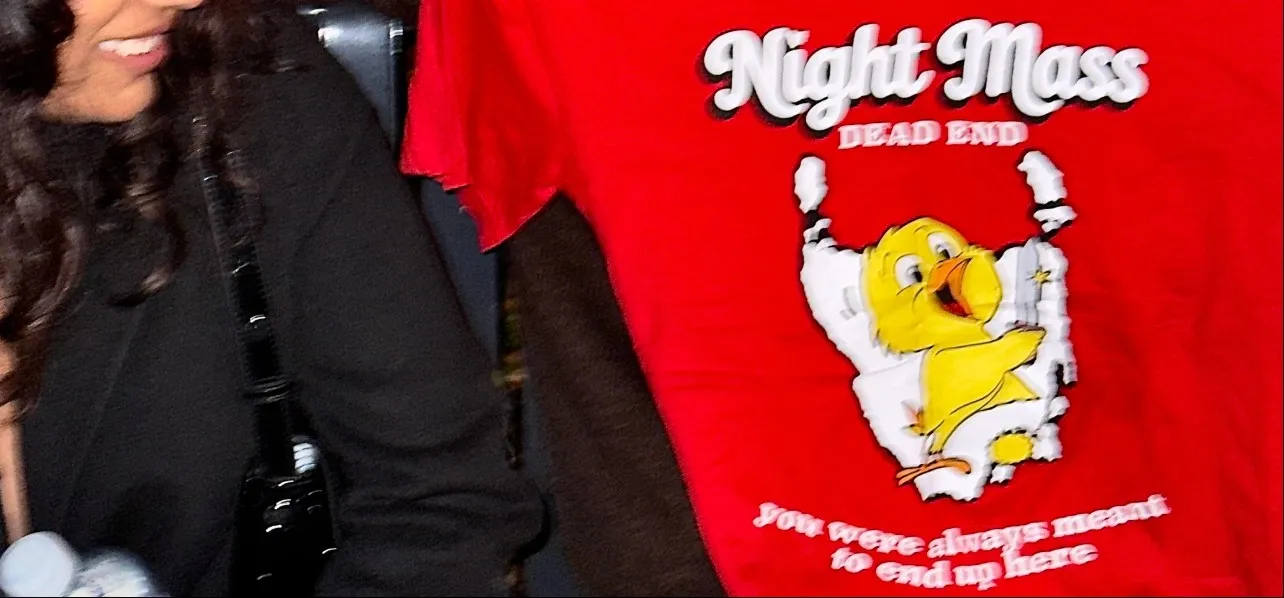
Which brings me to the merch table. Night Mass - the festival’s late-night engine - had merchandise this year and I’d argue that a merch table can be one of the most precise instruments we have for reading a scene’s life stage.
The instrument reads differently at different scales. For a small artist or rave collective, merch is survival - direct income, capitalism’s entry fee. For an established underground brand, merch appears at the exact moment the audience exceeds the capacity of its rooms. It signals affiliation for the overflow: a way to wear a night you couldn’t fully get into, or to keep wearing it in Melbourne, where niche cultural performance gets you social credit. It means the brand has outgrown the building. It means demand has become franchisable.
This isn’t a death notice. Boiler Room survived its merch; band tees never killed a single band. But it is a phase transition and it obeys a law worth writing down:
“The moment the underground gets a logo, the genuinely underground migrates one layer deeper.”
04 — THE GAP
So: has the algorithm made Dark Mofo more mainstream? The question dissolves on contact. The part of it you can see has, deliberately, because that part’s job is to be seen - to fund, to advertise, to absorb. And it has moved just as deliberately in the opposite direction, preserving a layer beneath the waterline of the feed, where Instagram stories can’t follow.
The week before I flew, I watched the same festival four times and learned the dots I was expected to map. When I got there, I connected them anyway - those premeditated dots, architected by the festival and the algorithm together - and thoroughly enjoyed them, in a crowd doing the same. I also saw a niche Sydney underground DJ post stories of his set from the Night Mass.
At Night Mass I caught myself mid-thought, how much busier & mainstream has this become - the oldest reflex in any scene: last one in, close the door. But this reach has duality. The same visibility that flattens the content also finds the people it was meant to find. The proof was walking around me: more underground artists playing, more genuinely cool people, more authentic fashion on the floor than when I stood in the same rooms in 2023.
Not everyone needs to be niche and avant-garde. You can visit the underground as a tourist and for some people, that tourism is exactly how they find their community and stop being tourists. The more I talked to strangers in lines, to program organisers, the deeper I dug into the off-program parallel events, the more certain I became that the real essence of Dark Mofo is still preserved somewhere in the gaps between those dots.
“The underground doesn’t need to disdain the mainstream to survive it. It just needs spaces the algorithm can’t follow.”